
Hidden Springs Homestead may earn a commission for purchases made after clicking links on this page. Learn More.
Growing healthy tomatoes in backyard gardens are a very popular fruit to grow. In this article, I will show you how to start tomatoes from seeds, how to transplant them into your garden soil, what organic fertilizers to use, and how to maintain them to grow delicious juicy tomatoes.
Growing tomatoes is probably the most popular fruit to grow in a garden, and for a good reason; not only are they delicious to eat right off the vine, but they are also so useful in many different ways. It seems that each year, growing tomatoes is different.
But one year, the vines are loaded with bright red juicy tomatoes, and then the next year, you are doing everything you can think of to even grow healthy tomatoes.
Over the years, I’ve kept a garden journal of tips and tricks I’ve tried. Some failed while others were a success. I’ve compiled for you a list of the best tips that have worked for me over the years.
How To Grow Healthy Tomatoes Successfully
Learn The Different Tomato Types
Before you begin growing tomatoes, you will need to make the first decision. Whether to grow determinate or indeterminate types:
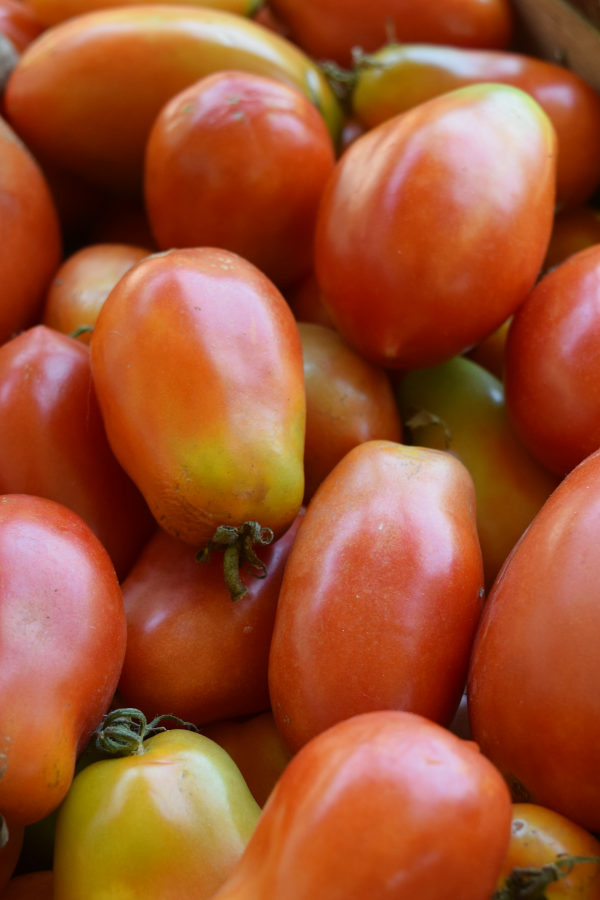
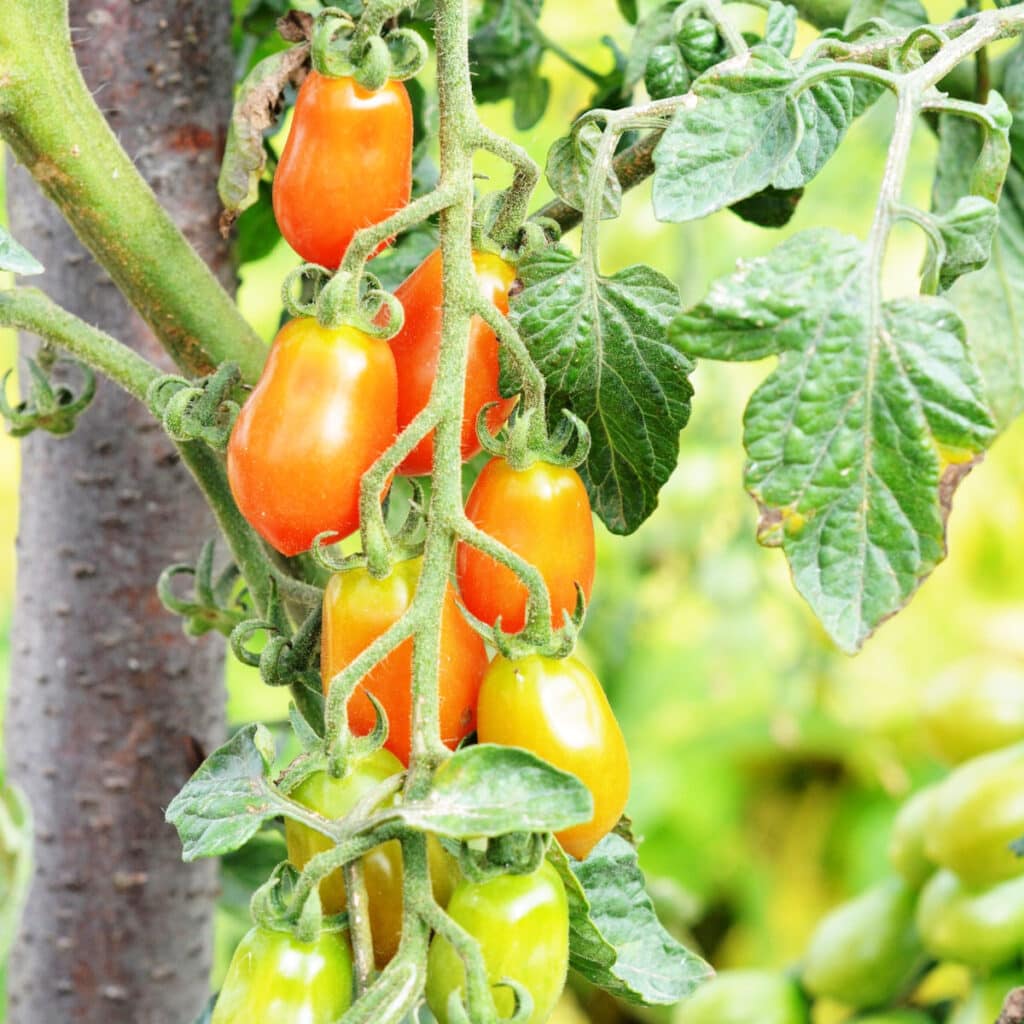
Determinate tomatoes grow to be about 3-4 feet tall and then stop growing. They will then start putting all their energy into flowering and setting fruit. Determinate tomatoes set fruit all at once and then die, which makes this type a great tomato for canning.
Determinate tomatoes are also good for growing in containers or small spaces.
Roma is my favorite determinate tomato to grow. It is a meaty tomato that is great for making spaghetti sauce, pizza sauce, or just canning whole. And they are great for not taking up a lot of space in raised beds.
Indeterminate tomatoes are exactly the opposite. They don’t stop growing and producing until killed by frost. They can get completely out of hand if you are not careful.
Meaning that since they continue to grow and produce, an indeterminate should be trellised and supported. They also will need to be pruned to keep control of them.
These tomatoes will produce all season for enjoying fresh vine ripe, juicy tomatoes.
If you are a beginner at growing tomatoes, I would recommend you choose a determinate type to begin with.
Know Your Planting Zones and Frost Dates
Knowing when to start seeds indoors will depend on your planting zone and frost dates. You can find your zone by looking at this USDA Plant Hardiness Map, and then the Farmers Almanac is an easy way to find the frost dates for your area.
RELATED: Even if you’ve never gardened before, this Vegetable Gardening for Beginners Ultimate Guide is for you! Learn everything you need to know from over 60 resources, all in one place, to be a successful gardener, including improving soil, cover crops, warm and cool season crops, organic amendments, fertilizing, watering, and so much more.
How To Grow Tomatoes From Seeds
You can purchase tomato plants from a local garden center, but if you are growing several, this can get pretty costly. There is a much more frugal way of growing huge and healthy tomatoes.
I recommend purchasing heirloom seeds and start seeds indoors. They should be started indoors 6-8 weeks prior to the last frost in your area.
You can build an inexpensive grow light system to be even more successful. Also, choose the best tomato varieties that will grow well in your zone to be more successful.
A good seed company catalog will describe the best-growing conditions for each variety they sell. Here is a list of my favorite organic seed companies with great selections.
RELATED: Take the guesswork out! Use the easy formula worksheets in The Canning Garden Workbook (printable) to figure out how much to plant, for canning, to feed your family for a full year!
Transplanting
When planting other vegetables, you only need to place the roots and the depth of the pot into the soil, but to grow healthy tomatoes, you want to plant much deeper.

How deep do tomato roots grow? It may sound very strange, but dig a hole as deep as your plant is tall. Yep, you read that correctly. Dig the hole as deep as your plant is tall.
All those little while “hairy tendrils” on the stem are actually roots. So the deeper you plant the seedling, the more vigorous and strong the root system will grow.
Fill the hole with soil amendments listed below, and remove the lower leaves leaving the top one-third of the leaves intact. And then, place approximately two-thirds of the plant in the soil and water and fill the hole.
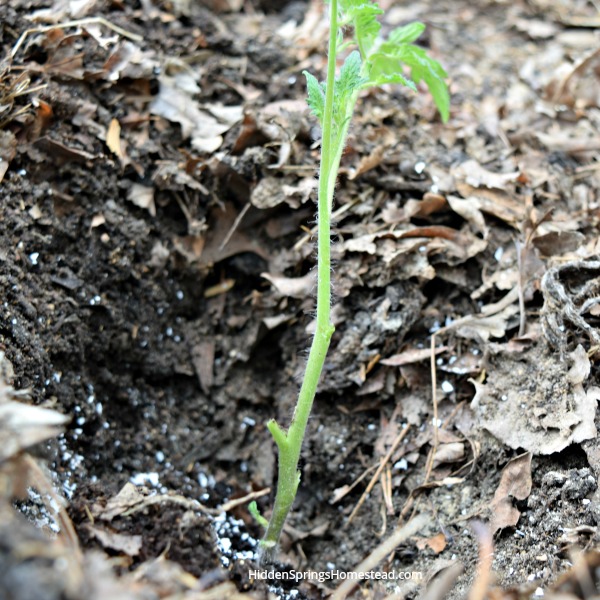
Roots will grow from those tiny white hairs you see on the stem making the plant healthy and stronger, allowing it to pull more nutrients from the soil. A tomato plant with a deep root system is more able to withstand drought conditions and hot weather in the summer heat.
So, for example, if you have an 8-inch tall tomato plant, you will plant it 6 inches deep in the soil. This will leave the additional 2 inches above the ground.

Spacing
Tomatoes don’t like to be crowded. The ideal spacing for tomato plants is 28 inches apart. This gives them adequate room to grow and stretch to the sunlight.
RELATED: Garden Mapping: Planning and Organizing Your Garden For Best Yields.
Note: Good healthy soil is important. When growing strong tomatoes, don’t overlook what’s in your soil before adding amendments.
Fertilizers
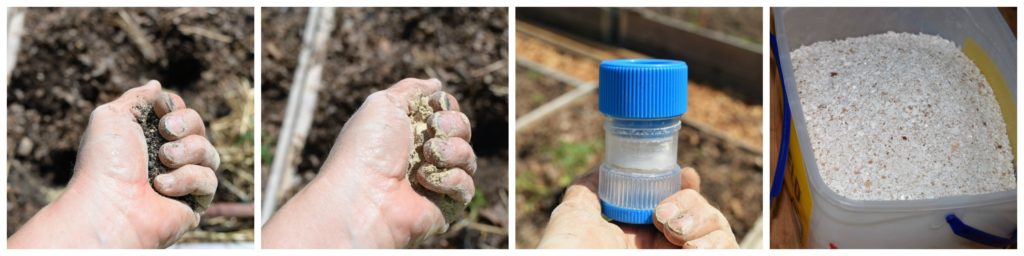
- Organic Vegetable Fertilizer – to add nutrients to the soil
- Bone Meal – for aiding in flowering to set fruit
- Worm Castings – healthy microbes and bacteria for the soil
- Crushed Egg Shells for Added Calcium (aid in preventing blossom end rot)
- 2 cups of Compost Tea (make your own) – produce healthy plants
- And 2-uncoated, crushed aspirin (any brand) – boost the immune to fight tomato diseases
Tomatoes like to be in 7-8 hours of full sun and need about 2 inches of water per week.
So when choosing where to start your garden or set your containers, make sure it is a location where they will get enough sunlight.
Tomatoes are susceptible to diseases such as Leaf Curl, Blight, and Blossom End Rot, so it’s important to keep them watered and fertilized.
Care and Maintenance
Tomatoes are heavy feeders. To keep them healthy and growing all season, maintain the water they need each week. Once they start producing fruit, use the same organic fertilizer about every two weeks. This process continues until the first frost kills them.
But you don’t have to lose your green tomatoes once frost hits! Gather them off the vine and use one of these five easy ways to ripen them inside.
But when they set to bloom, give them some additional phosphorus, such as sea bird guano, to help them blossom and extra potassium, such as Langbeinite or a Sulphate Potash, to help them set fruit.
If there were any tomato-growing secrets, this would be it. Be sure to feed with an organic fertilizer when transplanting, then about 2 weeks later, and then once a month until they begin to bloom. Then add additional organic potassium and phosphorus to help bloom and set fruit.
Doing this will help your tomatoes grow strong and healthy and produce a lot of juicy, delicious tomatoes.
More Garden Growing Tips:
- How to Grow Okra
- Growing Potatoes, All You Need to Know
- How to Grow Cucumbers
- 13 Fast-Growing Vegetables Fall Vegetables for a Productive Fall Garden
- Best Ways to Ripen Green Tomatoes Before Fall Frost Arrives
Ways of Preserving Fresh Tomatoes
- Canning Whole Tomatoes
- Freezing, Easy Way to Peel Tomatoes
- Easy Homemade Spaghetti Sauce
- Fresh Homemade Pizza Sauce for Canning
- Sun-Dried Tomatoes
- Common Mistakes Made Growing Tomatoes
- Canning Tomato Juice with Fresh Tomatoes

Connect with Hidden Springs Homestead!
Be sure to follow me on social media so you never miss a post!

Dianne Hadorn is the owner of Hidden Springs Homestead, nestled in the hills of East Tennessee. A Master Gardener and lifelong homesteader, she teaches families how to grow real food, preserve it with confidence, and depend less on the grocery store. Through her practical, down-to-earth approach, Dianne has become a trusted source for beginners who want to build a sustainable lifestyle and fill their pantries with food they’ve grown themselves.
Seran wrap over the seeds in a small bio degradable box..
Hi Janelle,
Seran wrap does work really well when germinating seeds. Its holds the moisture in the soil so the seeds will germinate. So do you start your plants from seeds? This was my first year doing so…