
Hidden Springs Homestead may earn a commission for purchases made after clicking links on this page. Learn More.
If you want to get rid of earwigs in your garden, start by understanding their habits. Finding earwigs hiding under flower pots or piles of leaves can be unsettling as they scurry away, but are they true enemies in the garden?
You’re not alone in feeling unsettled by these creepy-looking insects. While earwigs can cause some plant damage, they also feed on many pests that can harm your plants.
This article will help you decide when to leave earwigs alone and when it might be time to take control—using natural methods that are safe for your garden.
What Are Earwigs?
Earwigs are attracted to warm, humid climates and can be found in most garden zones.
They are long, flat, reddish-brown bodies that grow to about ¾ inch long. They are quick to move and nocturnal. So, running into one while gardening may not happen often, but it will be easily recognizable when you do. That’s because of the two pincers, called cerci, on the back end of their abdomen.
They have six legs and two antennas. Although they look wingless, all earwigs have wings. So, do earwigs fly? Rarely. They prefer to hitch free rides on boxes, vegetables, wood, etc.

Earwigs are social rather than territorial, so you’ll often find several hiding together in dark, damp spots like under flower pots, dead leaves, logs, or piles of firewood.
Life Cycle of Earwigs
Adult males have curved cerci, while females’ are straight, making it easy to tell them apart.
In fall and winter, female earwigs burrow up to 6 inches deep to lay 30-60 pearly white eggs. These eggs, about 1.13 mm long, absorb water and double in size.
As mold grows on them, the female cleans it off to protect her brood. Eggs hatch in about 70 days during winter or within 20 days in warmer conditions. Winter-hatched broods remain in the soil until spring.
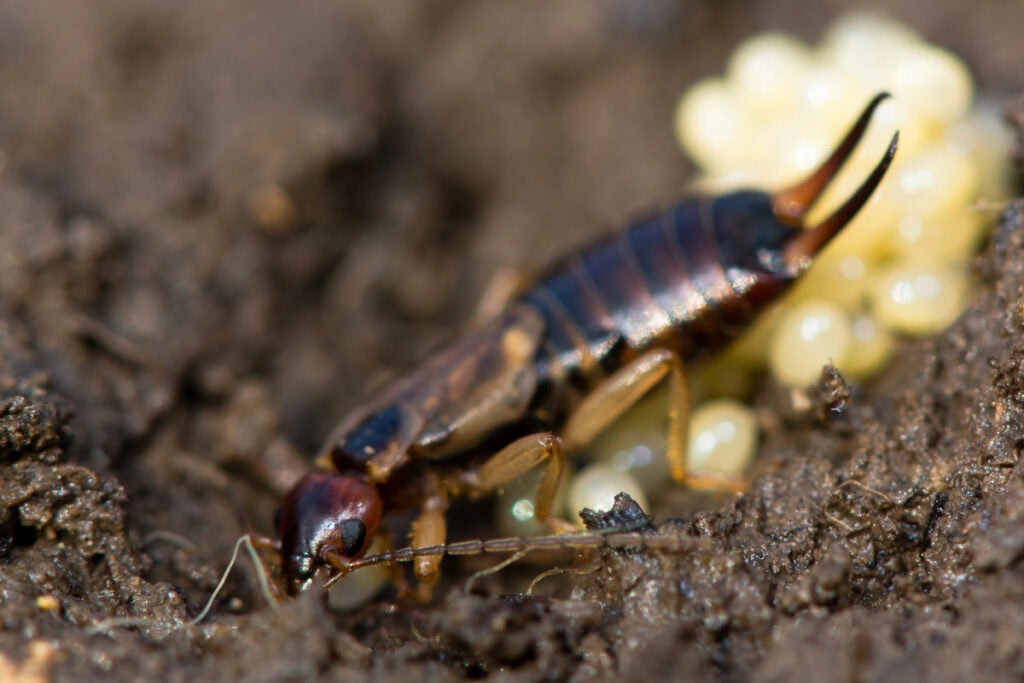
The females stay inside the chamber to guard and keep the eggs through their first instar, then die off. Young earwigs resemble their parents but are lighter in color.
Nymphs go through 4 stages until they are fully grown. All four stages appear like adults but are smaller and increase in size with each nymph stage. As they age, their color darkens, and their wings grow in size.
Are Earwigs Harmful to Gardens?
Earwigs are omnivores, primarily feeding on decaying plant and animal matter. However, when their populations grow too large, they may turn to live plants for food, which can cause significant damage to fruits and vegetables.
Their favorite garden crops include cabbage, corn, chard, cauliflower, cucumbers, lettuce, peas, tomatoes, beans, potatoes, apples, peaches, apricots, plums, and pears.
Young seedlings and mature plants provide shelter for earwigs, which leads them to feed on the plants and leave their droppings behind, contaminating these crops.
In addition to vegetables and fruits, earwigs often hide and feed on flowers. Some favorites are dahlias, carnations, pinks, Sweet William, and zinnias. When food is scarce, they may also damage strawberries and other soft fruits.

Signs of Earwig Activity & Damage
Earwigs can cause significant damage to vegetable and flower crops if their numbers get out of hand. Recognizing the signs of earwig damage can help you decide when to take action.
Look for numerous small, irregular holes in leaves, especially on vegetables and flowers. Earwigs are also known to chew on corn silks, impacting pollination and reducing harvests. They may bore tiny holes into fruits and vegetables like peppers, potatoes, and tomatoes. You might also notice frass (insect droppings) on leaves and in stem crevices.
Damage from earwigs can resemble that caused by slugs or snails. However, unlike slugs, earwigs don’t leave a slimy trail. If there’s no slime, earwigs are likely the culprits.
Identifying these signs early can help you protect your plants and prevent further damage.
Are Earwigs Garden Pests or Helpers?
Earwigs can seem like a nuisance, but they serve a dual role in the garden.
While they sometimes feed on young plants and fruits, earwigs are also valuable allies in pest control. These insects are natural predators to common garden pests, including aphids, slugs, and certain larvae that can damage crops.
By feeding on these unwanted insects, earwigs help maintain a healthy garden ecosystem, reducing the need for additional pest control.
So, when should you get rid of earwigs?
If their population remains manageable and your plants are not damaged visually, it may be beneficial to leave them alone.
However, it might be time to intervene if you notice extensive feeding on vegetable plants, flowers, or fruit trees. Whether you let them stay or remove them, earwigs play a unique role in your garden, and finding a balance is key.
The following natural methods will help you control earwig populations without disturbing your organic garden’s health.
Natural Predators of Earwigs
As with any insect, earwigs have natural predators that enjoy eating them. All of which are beneficial to your garden.
- Birds
- Praying Mantis
- Assassin Bugs
- Toads
- Tachinid Flies
Attracting any of these to your garden helps control earwigs and maintain a healthy ecosystem.
How to Get Rid of Earwigs Naturally
If you find your garden suffering significant damage from earwigs, use these safe earwig controls to trap them without using poisoned insecticides, including ones considered “organic.”
Remember, earwigs are nocturnal and love to find hiding places for daytime hours.
1) Hose Traps
Lay short pieces of garden hose or small plastic PVC pipe (less than 1 inch in diameter) around the garden between plants as traps. The earwigs will crawl inside to seek shelter. In the early morning hours, go out to check the traps.
Carefully pick up the traps and dump them into a bucket of soapy water.
2) Newspaper Traps
Dampen rolled newspaper into tubes, tied them with jute or string, and placed them under plants. Leave the tubes for 3-4 days. Corrugated cardboard also works well if you don’t have a newspaper.
Earwigs will crawl inside and live. Gather up the newspapers and put them in the compost or trash.
3) Oil Pit Traps
Place an empty tuna can in a shallow hole near damaged plants, with the can’s rim level with the soil.
Fill it ½ inches deep with a smelly liquid like soy sauce, fish oil, or drops of bacon grease mixed with vegetable oil. The scent attracts the earwigs, which become trapped in the oil.
Check and empty the can each morning.
All these traps work well. We’ve used all three with much success. We also noticed that thrips are attracted to the Oil Pit Trap, so it was a double win!
4) Ducks and Chickens
Both ducks and chickens will seek out earwigs and eat them. But a word of caution, especially when using them in a garden: Both can damage plants and chickens more than ducks. Using them as natural predators is best once plants are fully grown and less fragile.
They will also add organic amendments, such as manure, which improves soil structure.
5) Food Grade Diatomaceous Earth
Food grade DE works well against getting rid of earwigs in the garden. Be sure to pick up food grade, not DE, used to treat pools.
Diatomaceous Earth is made of mined fossilized shells of sharp diatoms. When soft-bodied bugs come in contact with it, their exoskeletons are shredded and dehydrated.
WARNING: We suggest using this as a last resort. DE is not picky and will kill beneficial bugs, too.
How to Use: Sprinkle DE on dry soil around the base of plants affected by earwigs; alternatively, lightly dust with a garden puff duster if it’s easier.
How to Deter Earwigs From Your Garden
Prevention is key to controlling earwig populations and other pests. Making their preferred habitats less inviting can help reduce their numbers and prevent infestations from becoming a problem in your garden.
1) Keep Plant Debris Cleaned Up
Earwigs need shady, moist places to hide during the day. Cleaning up garden debris such as broken stems and old leaves gives them fewer hiding places.
2) Use Feet on Pots
Instead of sitting flower pots on the soil or concrete, use plant risers under them. These keep the pot lifted, removing the hiding place underneath.
3) Water Early in the Morning
Since earwigs are attracted to moisture and dark areas, watering in the morning gives the plants time to absorb the moisture, leaving much less for earwigs to access at night.
RELATED: How and When to Water a Garden will walk you through how best to water your garden.
4) Use Companion Planting
Earwigs do not like plants that give off strong smells, so interplant flowers and herbs in your garden to deter them.
Some suggestions are:
5) Plant Flowers that Attract Natural Predators of Earwigs
As mentioned, earwigs have several natural predators: birds, Praying Mantis, Assassin Bugs, Toads, and Tachid Flies.
All these predators are natural pest control for earwigs and many other pests in your garden and around your home.
Some suggestions are:
- Fennel
- Tansy
- Fiddleneck
- Parsley
- Buckwheat
- Lemon Balm
- Clover
All these flowers and herbs will also help attract pollinators to your garden, improving harvests. You can plant flowers and herbs that are late “bloomers” and will feed pollinators into the fall, which will help control earwigs all season long.
- To recap, keep the garden area clear of debris and water in the morning, and use companion planting like basil and marigolds to create an unwelcome environment for earwigs.
Managing earwigs doesn’t have to mean wiping them out entirely. By keeping an eye on plant damage and using simple, natural methods, you can keep earwig populations in check while allowing them to play their beneficial role in your garden.
Remember, every garden has its unique ecosystem, and understanding your garden’s needs will help you strike a healthy balance between pests and helpers.
With the right approach, you can maintain a balance that supports thriving plants, fewer pests, and less work for you!
Do you consider earwigs a garden helper and see signs of them in your garden? Tell us about it in the comments section below.
More Garden Pest Articles You’ll Love!
- How to Get Rid of Ants in the Garden
- 5 Ways to Naturally Control Cabbage Worms
- How to Identify and Get Rid of Squash Bugs
- How to Get Rid of Squash Vine Borers
- Black and Yellow Garden Spiders – Friend or Foe?
- How to Naturally Get Rid of Yellow Jackets
- 15 Ways to Naturally Control Tomato Hornworms
- Holes in Tomatoes? How to Kill Tomato Fruitworms


Dianne Hadorn is the owner of Hidden Springs Homestead, nestled in the hills of East Tennessee. A Master Gardener and lifelong homesteader, she teaches families how to grow real food, preserve it with confidence, and depend less on the grocery store. Through her practical, down-to-earth approach, Dianne has become a trusted source for beginners who want to build a sustainable lifestyle and fill their pantries with food they’ve grown themselves.